Most small businesses have a website. Few have one that actually generates enquiries. Here is what your small business website needs to start converting visitors into leads.
A lot of small businesses have a website. Far fewer have a website that actually does anything useful.
If yours sits there looking presentable but rarely brings in a phone call or a contact form submission, you are not alone. It is one of the most common problems we come across when talking to small business owners. The website exists, it looks fine, but it is not working.
This article explains what separates a small business website that generates enquiries from one that just takes up space on the internet.
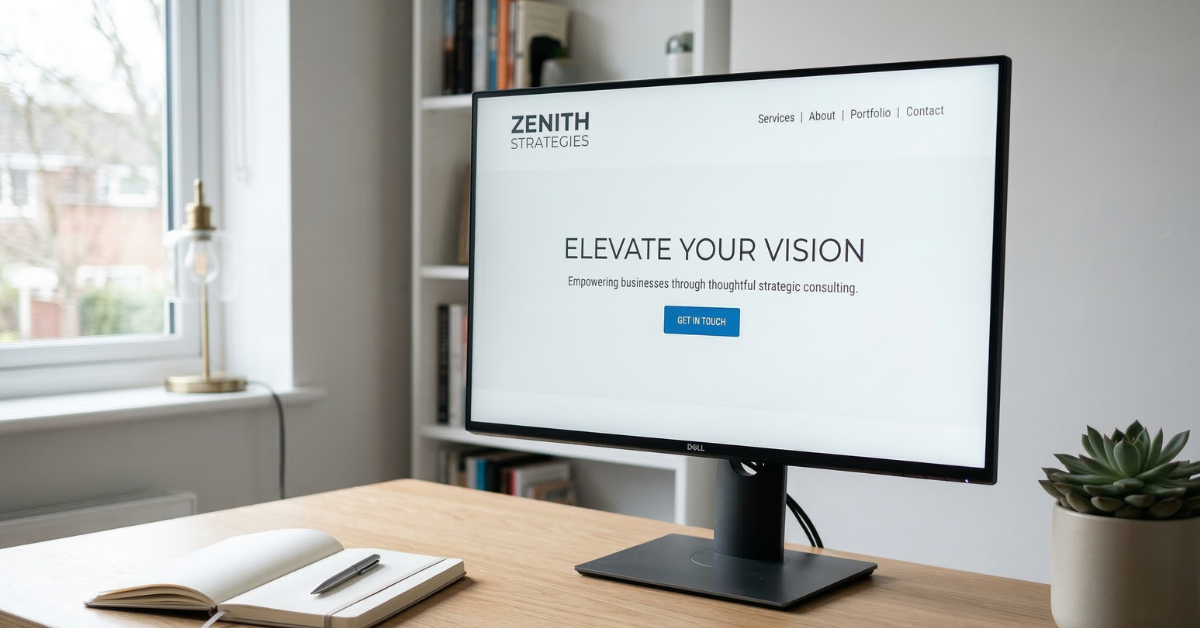
Most small business websites look presentable but fail to convert visitors into enquiries.
Why most small business websites do not generate enquiries
Before getting into what works, it is worth being honest about why so many websites fall short.
The most common reasons are:
- The website does not clearly explain what the business does or who it is for
- There is no obvious reason for a visitor to get in touch
- The site is slow, hard to use on a mobile, or looks outdated
- There are no service pages targeting the searches customers actually make
- The contact process feels complicated or uninviting
None of these problems are difficult to fix. But they do need to be fixed. A website that ticks every visual box and still does not generate enquiries usually has at least one of the issues above.
Start with clarity, not design
The single most important thing a small business website needs to do is be clear.
Within a few seconds of landing on your homepage, a visitor should know:
- What you do
- Where you do it
- Who you help
- How to get in touch
That sounds obvious, but a surprising number of websites make visitors work to find this information. Vague headlines, confusing navigation, and walls of text about company history all get in the way.
A visitor who cannot quickly understand what you offer will leave. They will not dig around trying to figure it out.
So before worrying about colour schemes or photography, get the basics right. If your headline currently says something like "Welcome to [Business Name]", that is the first thing to change.
Your homepage needs to do a specific job
Think of your homepage as a signpost, not a brochure. Its job is to direct visitors toward the right place quickly, reassure them that they are in the right spot, and give them a clear next step.
A straightforward homepage structure for a small business website looks like this:
Headline that explains what you do and who you help. Keep it short and plain. Something like "Website Design for Small Businesses in the North West" works better than "Transforming the Digital Landscape for Growing Enterprises."
Short supporting paragraph that adds a bit more context and starts to build confidence.
Clear call to action such as "Request a Quote" or "Get in Touch." Make it easy to find and easy to click.
Brief overview of your services so visitors can see the range of what you offer.
Why choose you section that explains what makes working with your business sensible. Keep this honest and specific rather than generic.
Contact options that are simple. A form and an email address are usually enough. Do not make people hunt for this.
That structure is not complicated. Most small business websites that struggle are missing one or more of those elements, or have them buried where nobody looks.
Service pages are where enquiries actually come from
Your homepage introduces you. Your service pages are where the work gets done.
If someone searches for "electrician in Warrington" or "physiotherapist in Widnes," Google is not going to show them your homepage. It is going to look for a page on your website that specifically covers that service in that area.
Every service you offer should have its own dedicated page. That page should:
- Clearly name the service in the headline
- Explain what the service involves and who it is for
- Address the common questions or concerns a customer might have
- Include your location or the areas you cover
- Have a simple call to action at the bottom
A page for each service is not just good for SEO. It also makes it easier for visitors to find exactly what they are looking for, which makes them more likely to enquire.
If your website currently has one "Services" page with a bullet list, that is worth reconsidering. Separate pages for each service will almost always perform better.
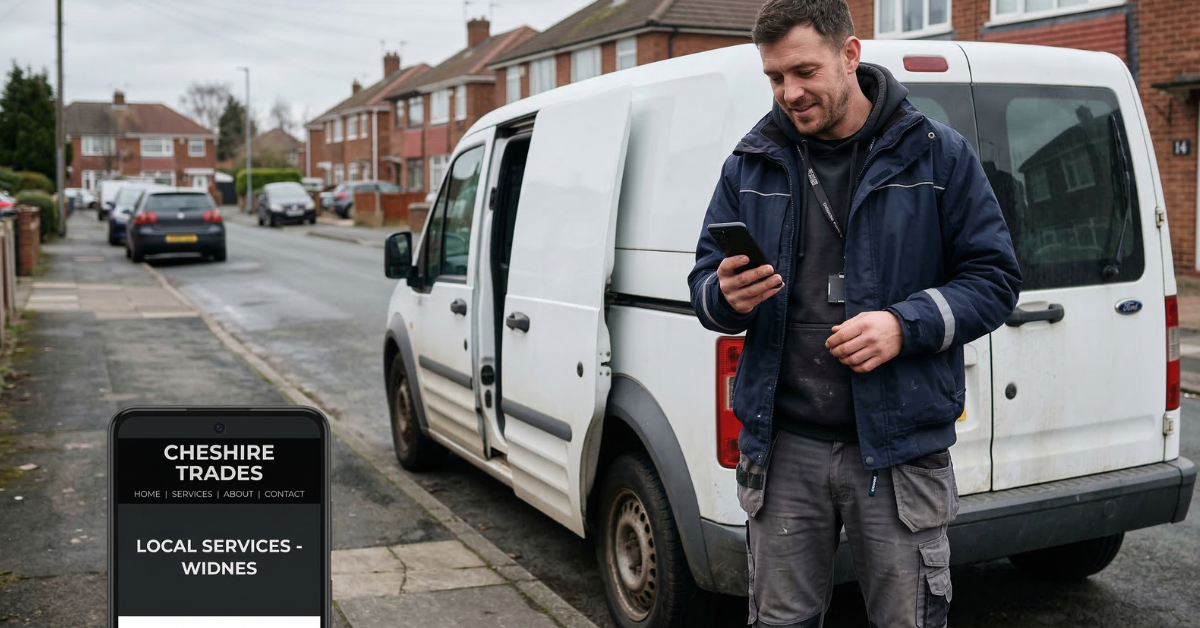
Dedicated service pages are often where enquiries actually originate, not the homepage.
Your contact process needs to be frictionless
It sounds simple, but a lot of websites make enquiring harder than it needs to be.
If your contact form asks for fifteen pieces of information before someone can send a message, you will lose people. If your contact details are buried in the footer, you will lose people. If clicking "Contact" takes visitors to a blank page with just an email address, some of those people will lose patience and go elsewhere.
The easier you make it to get in touch, the more enquiries you will receive. That means:
- A short contact form that asks for name, email, and a brief message
- A clear contact route visible in the header of the site, not just the footer
- A contact page that feels welcoming rather than bare
- Response time expectations set somewhere on the page so people know when to expect a reply
Small things like this make a real difference to whether a visitor becomes an enquiry.
Mobile matters more than you might think
More than half of website visits from potential customers happen on a mobile phone. For local service businesses, that number is often higher, particularly when someone is searching quickly on the move.
If your website is difficult to use on a phone, you are losing enquiries. Things to check:
- Does the text resize properly on smaller screens?
- Are buttons and links easy to tap without zooming in?
- Does the site load quickly on a mobile connection?
- Is it obvious how someone should get in touch on a mobile screen?
A website that looks great on a desktop but is awkward on a phone is only doing half its job.
Speed is not optional
A slow website drives visitors away. Research consistently shows that people abandon websites that take too long to load, particularly on mobile.
Common causes of slow websites include:
- Images that have not been compressed properly
- Outdated or poorly maintained plugins
- Cheap hosting that cannot handle traffic efficiently
- Too many scripts and add-ons running in the background
If your website takes more than three seconds to load, it is worth investigating. Your web developer or hosting provider should be able to help identify what is slowing things down.
Build trust before asking for the enquiry
When someone lands on your website, they do not know you. They are deciding whether to trust you enough to get in touch.
Your website should give them reasons to do that.
Trust signals for a small business website include:
- Testimonials from real customers, ideally with names and specifics
- Examples of previous work or projects
- Accreditations, memberships, or qualifications where relevant
- A clear explanation of how the process works, so people know what to expect
- A photo of you or your team, which makes the business feel human
You do not need all of these, but the more evidence you give that you are a real, reliable business, the more likely visitors are to make contact.
What about Google? Do I need SEO as well?
Getting the website right comes first. There is no point driving traffic to a site that does not convert visitors into enquiries.
But once the foundations are solid, visibility on Google is the next logical step.
Local SEO for small businesses is largely about making sure:
- Your service pages clearly target the services and locations your customers search for
- Your Google Business Profile is properly set up and kept up to date
- Your business information is consistent across the web
None of this requires a complicated strategy. It requires getting the basics done properly and keeping them maintained.
If you want to understand more about local SEO specifically, we have written a separate guide on local SEO for small businesses.
Running through a simple checklist can reveal quick wins that make a real difference to enquiry rates.
A quick checklist before you publish
Whether you are building a new website or reviewing an existing one, run through these:
- Does the homepage immediately explain what you do and who you help?
- Is there a clear call to action visible without scrolling?
- Does every service you offer have its own dedicated page?
- Is your contact form short and simple?
- Is your contact route easy to find?
- Does the site load quickly on a mobile phone?
- Are there testimonials or examples of your work?
- Does the site look professional and up to date?
If the honest answer to most of those is no, there is work to be done. The good news is that none of these are expensive or complicated fixes if you approach them in the right order.
The bottom line
A website that generates enquiries is not about being flashy. It is about being clear, fast, trustworthy, and easy to use.
Most small business websites that do not perform well are missing something straightforward rather than something technically complex. The fix is usually about improving the basics rather than starting from scratch.
If you are not sure where to start with your own website, we offer a straightforward website review that looks at what is working, what is not, and what would make the most difference to your enquiries.
No jargon. Just honest feedback and practical suggestions.